Road User Charges have funded New Zealand's roads for decades, but 2026 is bringing the biggest shake-up in 50 years. In August 2025 the Government confirmed that by around 2027, all light vehicles — including petrol cars — will pay Road User Charges (RUC) through a fully digital system, ending the traditional petrol tax and moving the whole country to a distance-based model.
For fleet managers, this isn't a minor admin tweak. It's a structural change to how every vehicle you run is charged, reported, and kept compliant — and the fleets that prepare early will be the ones that avoid the scramble.
What's actually changing
The August 2025 decision builds on a shift that's already underway:
- Since 1 April 2024, battery electric vehicles (BEVs) and plug-in hybrids (PHEVs) have paid RUC for the first time.
- By around 2027, the Government plans to bring all 3.5 million light vehicles — petrol, diesel, hybrid and electric — into a single, modernised RUC system.
- Paper RUC licences and windscreen labels are being phased out in favour of electronic records.
- NZTA is stepping back from being both the regulator and the retailer of RUC, opening the way for approved third-party providers to manage purchasing and compliance.
In short: petrol vehicles move off fuel excise and onto distance-based RUC, and the whole system goes digital.
Why it's happening
The old funding model assumed everyone bought petrol. That assumption no longer holds. As Transport Minister Chris Bishop has noted, the number of fuel-efficient petrol hybrids on New Zealand roads grew from around 12,000 in 2015 to roughly 350,000 by 2025 — about a 2,800% increase — alongside rapid EV adoption.
The result is a growing mismatch between road use and road funding: some drivers cover long distances while buying little or no petrol, while others pay excise every time they refuel. Moving everyone to RUC fixes that, charging directly on distance travelled rather than indirectly through the pump. The policy logic is simple: if you use the roads more, you pay more — regardless of fuel type.
What RUC costs today
Distance-based rates already apply to diesel, heavy, and now electric vehicles:
- BEVs: $76 per 1,000 km
- PHEVs: $38 per 1,000 km (discounted to reflect the petrol excise they still pay)
Rates vary by vehicle type and weight, and they're set by NZTA — but the direction of travel is clear: distance-based charging is becoming the standard for every vehicle class.
What it means for NZ fleet managers
- One system across mixed fleets. By 2027, your petrol, diesel and EV vehicles all fall under the same RUC framework — a single, consistent compliance approach instead of today's split system.
- The end of NZTA point-of-sale. With NZTA stepping back from selling licences directly, you'll work with approved providers to purchase and manage RUC.
- Less paperwork — if you're set up for it. Digital records remove paper licences, but fleets still relying on manual tracking and spreadsheet reconciliation will feel the pressure first.
- More flexible cash flow. A digital system is expected to enable options like monthly billing and consolidated invoicing, improving forecasting and control.
- Early movers win. The fleets that modernise now will be ready in 2027 instead of reacting to it.
How Argus helps you get ahead
Argus Tracking is built to make RUC compliance simple, reliable and automatic:
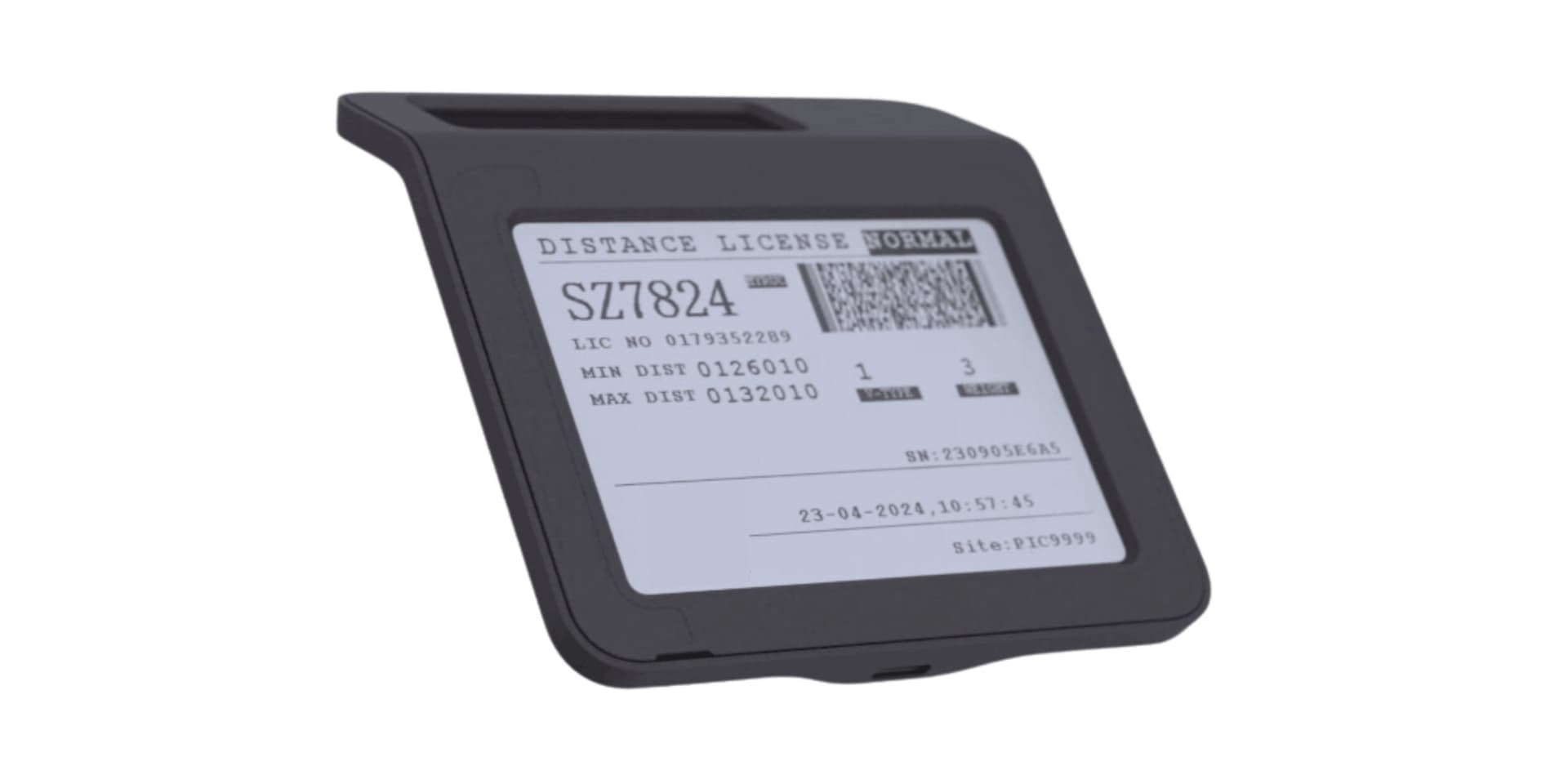
- Smart eRUC replaces paper labels with an NZTA-approved, solar-powered e-ink windscreen display that's enforcement-scannable and updates automatically. Integrated with the Argus telematics platform, it purchases RUC automatically as a vehicle approaches a distance threshold (via the Argus × Fleetwise integration) — no manual purchase, no expired-label risk.
- RUC Collect automates off-road RUC refunds for fleets in agriculture, forestry and construction — calculating off-road distance and auto-filling NZTA's electronic RUCOR form (up to 10 assets per submission, with no geofences or extra hardware). It's a saving many businesses leave on the table.
- Telematics for EV planning. If you're transitioning to EVs, accurate usage data lets you model future RUC obligations into your total-cost-of-ownership calculations before you commit to new assets.
What to do now
- Audit your current RUC process and find where manual steps create compliance risk.
- Consider whether Smart eRUC makes sense for your diesel fleet today.
- If you run EVs, build future RUC obligations into your TCO modelling.
- If you have significant off-road operations, talk to us about RUC Collect.
Compliance gaps don't announce themselves — they show up as fines, failed enforcement checks, and downtime. Getting ahead of the digital RUC transition now is far cheaper than responding to it after the fact. Talk to our NZ-based team about getting your fleet ready.