Petrol prices are biting, and the way New Zealand charges for road use is about to change. That makes choosing between petrol, hybrid and electric a bigger financial call than it used to be. Here's what each option costs to run today, how road user charges could shift the numbers, and how to work out what's right for your vehicle or fleet.
Key takeaways
About $61 of a $173.50 petrol fill is tax and levies, at $3.47 a litre.
Light diesel vehicles, EVs and plug-in hybrids already pay road user charges (RUC). Petrol cars and standard hybrids pay through fuel excise instead.
The Government has signalled it wants petrol vehicles on RUC, but no rate or start date has been set.
At today's light-vehicle RUC rate, petrol cars using less than about 9.4L/100km would pay more under RUC than they pay in excise now, or about 9.8L/100km once RUC transaction fees are counted. Thirstier vehicles would pay less.
Standard hybrids have the most to lose from the change, but in our example they still stay well ahead of petrol on running costs.
For fleets, the biggest savings usually come from matching each vehicle to the work it does, which starts with knowing how your vehicles are actually used.
Want your own numbers? Try the free Argus Tracking RUC Calculator →
How much of your petrol bill is tax?
When you fill up, you're paying for more than fuel. The pump price includes fuel excise duty, the ACC levy, two small levies and GST on the lot.
Here's a 50-litre fill at $3.47 a litre:
Component | Amount |
|---|
Fuel before taxes and levies | $112.24 |
Excise and levies | $38.63 |
Total paid | $173.50 |
That's about $61 in tax and levies on every $173.50 fill.
Not all of that would go if petrol moved to RUC. RUC is designed to replace fuel excise duty (currently 70.024 cents a litre, plus GST). The ACC levy, the smaller levies and GST on the fuel itself would stay in the pump price.
Because excise is charged per litre, a thirsty vehicle pays more towards the roads for every kilometre it drives than an efficient one does. A hybrid that uses half the fuel pays roughly half the excise over the same distance. As more efficient vehicles hit the road, that's a growing hole in road funding, and it's the main reason the Government wants to move to distance-based charging.
See how much fuel tax you pay each year →
What's changing with road user charges?
RUC is already part of life for many drivers. Diesel vehicles, fully electric vehicles and plug-in hybrids buy RUC licences in advance, based on the distance they travel.
For light vehicles up to 3,500kg, the current rates are:
$76 per 1,000km for diesel and electric vehicles
$38 per 1,000km for plug-in hybrids, which also pay excise whenever they buy petrol
Petrol cars and standard (non-plug-in) hybrids pay nothing in RUC. Their road contribution comes through excise at the pump.
If petrol vehicles move to RUC, what you pay for road use would depend on how far you drive, not how much fuel you burn. A small car using 6L/100km and an SUV using 12L/100km pay very different amounts of excise today. On the same RUC rate, they'd pay the same per kilometre. Their fuel bills would still be very different, but fuel efficiency would no longer change what they pay for the roads.
At today's light-vehicle rate, distance charges work out like this:
Kilometres a year | RUC at $76 per 1,000km |
|---|
8,000km | $608 |
12,000km | $912 |
15,000km | $1,140 |
20,000km | $1,520 |
30,000km | $2,280 |
40,000km | $3,040 |
These figures exclude transaction fees. For petrol vehicles they're illustrative only, because no petrol RUC rate has been set.
Would petrol drivers pay more or less under RUC?
It depends on how efficient your vehicle is.
Take a medium petrol car using 8L/100km and driving 12,000km a year:
Fuel bill: about $3,331 a year at $3.47 a litre
Excise (plus GST) inside that bill: about $773 a year
RUC at $76 per 1,000km: about $949 a year, including three online purchases at $12.44 each
On those numbers, this car would pay about $176 more a year, or roughly $15 a month, for road use under RUC.
The break-even point is about 9.4L/100km on fuel excise alone. At 80.5 cents of excise and GST per litre, that's the consumption where a year's excise equals $76 per 1,000km. Add the three online transaction fees in this example and it rises to about 9.8L/100km. Vehicles using less fuel than that would generally pay more under RUC than they do in excise now. Vehicles using more would generally pay less.
That doesn't make a thirsty vehicle cheap to run. A car using 12L/100km still burns far more fuel than one using 5L/100km. What changes is how the road-funding part of the bill is collected, which is why you need to compare total running costs rather than looking at fuel prices or RUC on their own.
Find your vehicle's RUC break-even point →
Petrol vs hybrid vs electric: which is cheapest to run in NZ?
To compare like with like, we've used one set of illustrative assumptions:
These are examples, not forecasts. Real-world consumption depends on the vehicle, the driving and the conditions.
Petrol: familiar and flexible, but the most exposed to fuel prices
Petrol vehicles are easy to buy, easy to refuel and available at almost every price point. For low-mileage drivers, a cheaper petrol vehicle can still be the sensible choice.
The catch is running costs. At 8L/100km, petrol costs $27.76 per 100km, or about $5,552 a year over 20,000km. Every rise at the pump goes straight onto that bill.
Standard hybrids: big fuel savings, no charger needed
Standard hybrids pair a petrol engine with an electric motor and a small battery that charges itself. They shine in stop-start city traffic.
At 4.5L/100km, fuel costs about $15.62 per 100km, or $3,123 a year. That's about $2,429 a year less than the petrol car in our example.
Hybrids are also the vehicles with the most to lose if petrol moves to RUC. They currently pay relatively little excise because they use so little fuel. On a flat per-kilometre charge, that advantage shrinks. The fuel savings themselves don't go anywhere, though, as the table below shows.
Electric vehicles: lowest energy cost, but RUC applies now
EVs charged at home are usually the cheapest to run per kilometre. At 18kWh/100km and 30c per kWh, electricity costs about $5.40 per 100km, or $1,080 a year.
EVs already pay RUC, which adds $1,520 a year at 20,000km. That brings the total to about $2,600 a year before transaction fees, still well below petrol.
That figure assumes home charging. Drivers who rely on public fast chargers can pay a lot more per kWh. EVs also need to be weighed up on purchase price, finance, insurance, tyres, battery warranty, resale value, range and access to charging.
Plug-in hybrids: the middle ground, if you plug them in
Plug-in hybrids (PHEVs) have a larger battery you charge from the wall, plus a petrol engine for longer trips. They pay RUC at the reduced $38 per 1,000km and pay excise on any petrol they use.
Their running costs depend almost entirely on how they're used. A PHEV charged every night and used mostly for short trips can run largely on electricity. The same vehicle rarely plugged in is effectively a heavy petrol car paying RUC as well. Before buying one, ask how often it will be charged and how many of its trips fit within its electric range.
Running costs today, and if petrol moved to RUC
Here's how the three main options compare over 20,000km a year, now and under an illustrative scenario where petrol vehicles pay RUC at $76 per 1,000km instead of fuel excise.
Vehicle | Annual running cost today | If petrol vehicles moved to RUC* |
|---|
Petrol (8L/100km) | $5,552 (incl. ~$1,288 excise + GST) | $5,784 |
Standard hybrid (4.5L/100km) | $3,123 (incl. ~$725 excise + GST) | $3,918 |
EV (18kWh/100km) | $2,600 ($1,080 electricity + $1,520 RUC) | $2,600 (no change) |
*Assumes the pump price falls by the full excise plus its GST (about 80.5c a litre) and RUC applies at today's light-vehicle rate. Excludes RUC transaction fees, purchase price, maintenance, insurance and depreciation. No petrol RUC rate or start date has been set.
On these assumptions, the hybrid's running costs rise by about $795 a year and the petrol car's by about $232. The hybrid still comes out roughly $1,866 a year cheaper to run than the petrol car.
On running costs alone, the EV wins. Add purchase price and the picture can change. A new EV usually costs more upfront than a comparable petrol or hybrid, and for lower-mileage drivers that gap can take years to recover, or never close. The vehicle with the cheapest fuel isn't automatically the cheapest to own. Purchase price, depreciation and how the vehicle is used all matter as much as the running cost per kilometre.
The hidden cost of the wrong vehicle in your fleet
For businesses, fuel decisions multiply fast.
Take a fleet of 20 petrol vehicles, each driving 25,000km a year at 9L/100km. At $3.47 a litre, that's about $156,150 a year in fuel. Every 10-cent rise at the pump adds another $4,500.
Now compare two vehicles doing the same job over 30,000km a year, one using 9L/100km and the other 5L/100km. The difference is $4,164 a year in fuel, or $20,820 over five years, if prices and distances stay the same. Across 10, 20 or 50 vehicles, that's real money.
That comparison leaves out purchase price, depreciation and future road charges. But it shows why fleet purchasing should be based on how vehicles are actually used, not on the sticker price.
Why real-world fleet data matters
Manufacturer fuel figures are a starting point. Vehicles that sit in traffic, carry equipment, climb hills or idle on site use more than the brochure says.
When you know how your vehicles are really used, patterns jump out. You might find that:
others regularly cover hundreds of kilometres and need a different solution
some vehicles are barely used and may not need replacing at all
idling or speeding is quietly adding to your fuel bill
Those insights shape what you buy next, and how many vehicles you actually need.
Work kilometres and personal kilometres don't cost the same
How a vehicle is used matters as much as what it is. Plenty of businesses let staff take a company vehicle home and use it privately. Those personal kilometres still burn fuel, still clock up RUC and still add wear and tear, but they earn the business nothing, and they can bring fringe benefit tax (FBT) with them.
A ute doing 25,000km a year might be doing 15,000km of paid work and 10,000km of weekends and school runs. The cost per working kilometre is a lot higher than the headline figure suggests, and the right vehicle for 15,000km of trade work may not be the right vehicle for 25,000km of mixed use.
Treat work use and personal use as two separate scenarios when you compare vehicles. You can't do that without trip data that shows where each vehicle went, when, and where it sat overnight.
Town driving and rural driving aren't the same either
Where the kilometres happen changes the answer too. In stop-start town driving, a hybrid is at its best: the engine switches off at the lights and braking puts charge back in the battery. A petrol or diesel vehicle is at its worst, idling in traffic and running cold on short trips. An EV is efficient here as well, and charging is usually close by.
On the open road the picture flips. At a steady 100km/h a hybrid loses much of its advantage, while diesel and petrol are at their most efficient per kilometre. An EV's range matters far more, fast chargers are further apart, and towing or a loaded tray can cut range sharply. Rural vehicles also tend to clock up more kilometres, so any distance-based charge hits them harder.
The brochure's combined-cycle figure is a blend of the two, and may fit neither. A vehicle that spends its life in Auckland traffic and one that runs between Taupō and Napier every day are two different cost cases, even if they're the same model.
How Argus Tracking helps fleets control running costs now
You don't have to wait for the RUC decision to start cutting costs. Argus Tracking gives you the data to see where money is going and act on it.
Utilisation reporting. See how far and how often each vehicle is used, so you can spot underused vehicles, share the load more evenly and make better replacement decisions.
Work and personal use. Geofence and stationary reporting shows which trips and overnight stays happen away from your work locations, so you can separate business and private kilometres and support FBT reporting.
Idle reporting. Our Idle Report records engine idling of two minutes or more, so you can see where and when vehicles are burning fuel without moving.
Driver behaviour and speeding. Risk points highlight speeding, including in school zones, at night and in bad weather, so you can coach the drivers who need it. Smoother, slower driving is safer and uses less fuel.
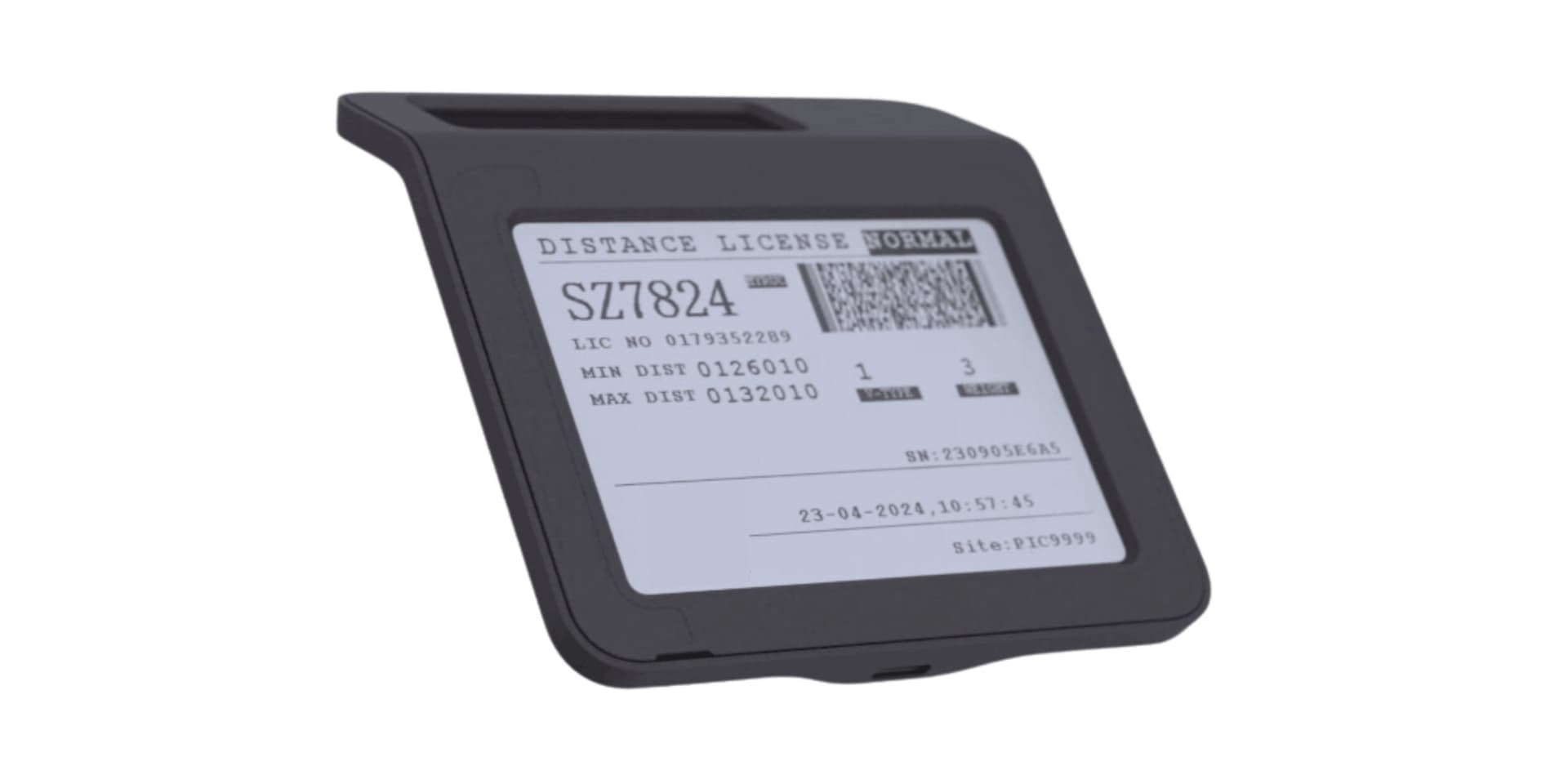
Automated RUC for diesel, EV and PHEV vehicles. Smart eRUC buys RUC automatically through NZTA and shows the licence on a digital windscreen display, cutting the admin of paper licences.
Off-road RUC refunds. RUC Collect uses your GPS trip data to help you prepare claims for RUC paid on off-road travel.
Some reports and features depend on your Argus plan and hardware. Talk to us about what fits your fleet.
If petrol vehicles do move to RUC, accurate distance records will matter for every fleet, not just diesel and electric ones. It's worth getting that in place now.
Explore Argus Tracking fleet management →
Should your business switch to electric?
EVs can make a lot of sense for businesses, but electrification works best vehicle by vehicle, not all at once.
The strongest candidates usually have predictable daily routes, a depot or home base to charge at overnight, and enough annual mileage to earn back the higher purchase price through lower running costs. Vehicles on long, unpredictable routes or towing heavy loads may be better suited to diesel or hybrid for now.
Compare options on total cost per kilometre: purchase price, finance, fuel or electricity, RUC, maintenance, insurance and resale value. Then check the vehicle can actually do the job, including range, charging time and payload. For most fleets, the answer will be a mix of petrol, hybrid, diesel and electric, each chosen for the work it does.
Five questions to ask before buying your next vehicle
1. How far will it travel each year? Mileage drives running costs. A vehicle covering 8,000km has a very different cost profile from one doing 35,000km.
2. What will it really use? Look past the brochure figure to your actual routes, loads and traffic. For existing vehicles, your trip and fuel records are the best guide.
3. What will road charges cost? For diesel, EV and PHEV, RUC is already part of the picture. For petrol and standard hybrids, model a few RUC scenarios.
4. What's the total cost over three to five years? A cheaper vehicle isn't always cheaper to own.
5. Can it do the job? Range, towing, payload, seating and charging access all matter more than the lowest running cost.
Frequently asked questions
Do petrol cars pay road user charges in New Zealand?
Not yet. Petrol cars and standard hybrids pay for road use through fuel excise at the pump. The Government has signalled a move to RUC for petrol vehicles, but no rate or start date has been confirmed.
How much is RUC for a light vehicle?
Page 8 of 10$76 per 1,000km for light diesel and electric vehicles up to 3,500kg, and $38 per 1,000km for plug-in hybrids. Transaction fees apply when you buy a licence.
How much tax is in a litre of petrol in NZ?
Fuel excise duty is 70.024 cents a litre. Add the ACC levy and other small levies, then GST, and taxes and levies come to about $1.22 of a $3.47 litre.
Will I pay more under RUC than I pay in petrol tax?
If your car uses less than about 9.4L/100km (9.8L/100km including transaction fees), at today's light-vehicle rate, you'd likely pay more. If it uses more, you'd likely pay less. The Argus RUC Calculator works it out for your vehicle.
Is a hybrid still worth buying if petrol moves to RUC?
In our example, a 4.5L/100km hybrid still runs about $1,866 a year cheaper than an 8L/100km petrol car under an illustrative RUC scenario. Its advantage shrinks, but it doesn't disappear.
Find out what RUC could mean for your vehicle
There's no single right answer for every driver. An efficient hybrid still makes sense for many people. An EV charged at home can save even more. For businesses, the biggest gains often come from smarter purchasing combined with better visibility over the fleet you already run.
The right decision comes down to your numbers. Our free RUC Calculator lets you enter your fuel use, petrol price and annual kilometres to see how much tax you pay now and what the same distance would cost at today's light-vehicle RUC rate. You can also test different RUC rates and see the tax breakdown on a typical fill.
Sources: NZ Transport Agency Waka Kotahi — RUC rates and transaction fees; MBIE — weekly fuel price monitoring; Ministry of Transport; Inland Revenue.
Use the free Argus Tracking RUC Calculator →
Running a business fleet? Argus Tracking helps New Zealand businesses see how their vehicles are used, cut avoidable fuel costs and plan their next purchases with real data.
Talk to the Argus team →
Disclaimer: This article uses illustrative fuel and electricity prices and published fuel excise and road user charge rates as at 7 October 2026. The Government has not confirmed a start date or RUC rate for petrol vehicles, so all petrol RUC comparisons are illustrative, not confirmed future charges. Actual costs will vary with fuel prices, electricity tariffs, driving conditions, how and where you buy RUC, and the vehicle itself. This article is general information, not financial advice.