


Oil Prices Are Climbing Fast: How Rising Oil Prices Affect Fleet Management Costs

Fuel prices have always been a key concern for businesses that operate vehicle fleets. Whether you manage delivery vans, service vehicles, or heavy transport, fuel is one of the most significant and unpredictable operating expenses.

Recent geopolitical tensions, including the March 2026 Iran conflict, have raised concerns about disruptions to global oil supply. When uncertainty affects oil markets, global oil prices can move quickly. These changes eventually influence diesel and petrol prices paid by businesses in New Zealand.

Understanding how rising oil prices affect fleet management costs is important for fleet managers, operations leaders, and business owners. While businesses cannot control global oil prices, they can take practical steps to reduce fuel consumption and improve efficiency across their fleet operations. Fleet tracking technology now gives businesses the visibility needed to identify fuel waste and improve operational efficiency across vehicles, drivers, and routes.

Quick Answer: How Rising Oil Prices Affect Fleet Management Costs

Rising oil prices increase the cost of diesel and petrol, which directly affects businesses that rely on vehicle fleets.

Key impacts include:

  • Higher operating costs as fuel prices increase for daily vehicle use

  • Pressure on business margins, especially for transport, delivery, and service-based companies

  • Greater budgeting uncertainty when fuel costs fluctuate

  • Increased focus on efficiency, encouraging businesses to reduce fuel waste

  • Greater value from fleet tracking and telematics, which help identify opportunities to improve fuel efficiency

Why the Iran Conflict Is Affecting Global Oil Prices

As of mid-March 2026, tensions involving Iran are already influencing global oil markets. Oil prices respond quickly to geopolitical risk, particularly when events occur in regions that play a central role in global energy supply.

Iran sits within one of the most strategically important oil-producing regions in the world. The broader Middle East accounts for a large share of global crude exports, and the region also hosts some of the most critical energy shipping routes. When tensions escalate, markets react to the risk of supply disruption, even if actual production has not yet changed.

One key factor is the Strait of Hormuz, a narrow shipping passage between Iran and Oman through which a significant portion of the world’s oil shipments move each day. Any perceived threat to shipping routes in this area can create immediate volatility in global oil prices because traders factor in the possibility of supply delays or transport risks.

Oil markets are also highly sensitive to uncertainty. Traders, refiners, and energy companies adjust purchasing decisions based not only on current supply levels but also on expectations about future availability. When geopolitical tensions increase, this uncertainty can lead to rapid price movements as markets attempt to price in potential risks.

Another factor influencing oil prices is global spare production capacity. In recent years, spare capacity in global oil production has been relatively limited. This means that if markets believe supply could tighten, prices can rise more quickly because there are fewer immediate sources available to offset potential disruptions.

For businesses operating vehicle fleets, the key takeaway is that global oil prices are shaped by a complex mix of supply, transport logistics, market expectations, and geopolitical risk. When prices rise at the global level, those increases eventually flow through to diesel and petrol prices in domestic markets, including New Zealand.

Understanding this connection helps explain why global events can quickly influence local fuel costs, and why businesses that depend on transport need to pay close attention to fuel efficiency and fleet operations.

Why Fuel Is One of the Biggest Fleet Costs

For many fleets, fuel can represent 20-40% of total vehicle operating costs, making it one of the most important expenses to manage.

To put this into perspective, even moderate fuel price increases can have a significant financial impact. For example, if fuel prices increase by around 25% and a business operates a fleet of 100 vehicles, this could translate to an additional $15,000 to $20,000 in fuel costs per month, depending on usage. Over a year, that could exceed $180,000 to $240,000 in additional operating costs.

This is an illustrative example based on a typical mixed-use fleet, and actual costs will vary depending on vehicle type, distance travelled, and operating conditions.

Every kilometre travelled requires fuel, and those costs quickly add up across multiple vehicles operating throughout the day.

Examples include:

Delivery fleets
Courier and delivery companies often run vehicles continuously during business hours. Even small increases in fuel prices can significantly affect operating costs across dozens or hundreds of vehicles.

Service vehicles
Trades, maintenance services, and field technicians rely on vans and utes to reach customer sites. Travel between jobs means fuel consumption is constant.

Trade businesses
Electricians, plumbers, and construction businesses often manage several vehicles travelling between worksites. Fuel costs can represent a substantial portion of daily operating expenses.

Logistics companies
Transport and freight operators depend heavily on diesel. Long-distance travel means fuel costs directly influence profitability.

Because fuel usage is directly linked to vehicle activity, any increase in fuel price multiplies across the entire fleet.

How Rising Fuel Prices Affect Fleet and Business Operations

When fuel prices increase, the effects extend beyond simply paying more at the pump.

For many businesses, higher fuel costs create a range of operational challenges.

Higher operating costs

Fuel price increases immediately raise the cost of running vehicles. Businesses that rely heavily on transport may see significant increases in monthly expenses.

Pressure on profit margins

Companies operating in competitive industries may find it difficult to pass higher fuel costs on to customers. This can place pressure on profit margins and financial performance.

Increased budgeting uncertainty

Fuel prices can change rapidly. Sudden increases can disrupt financial forecasts and operational budgets, particularly for businesses managing large fleets.

Operational planning challenges

Fleet managers may need to reconsider routes, scheduling, and vehicle utilisation to maintain efficiency when fuel prices rise.

Understanding the rising fuel costs impact on business operations helps organisations identify where improvements in efficiency can protect profitability.

Hidden Fuel Waste in Fleet Operations

Many businesses focus on fuel prices but overlook the hidden fuel waste that occurs during everyday fleet operations.

Without clear visibility into vehicle activity, fuel consumption can increase for reasons that are not immediately obvious.

Common sources of fuel waste include:

Excessive vehicle idling

Vehicles that remain running while stationary continue to consume fuel. Idling can occur during loading, waiting for jobs, or while drivers remain in parked vehicles.

Inefficient route planning

Poorly planned routes can increase travel distances, traffic exposure, and total fuel consumption.

Unnecessary trips

When vehicle usage is not monitored, extra trips may occur that add to fuel costs without improving productivity.

Limited visibility of vehicle activity

Without accurate data on how vehicles are used, businesses may struggle to identify where fuel waste is occurring.

These hidden inefficiencies can significantly increase overall fleet fuel consumption and operating costs, particularly when fuel prices are already rising.

How Fleet Managers Can Reduce Fuel Costs During Price Spikes

While fuel prices are influenced by global markets, businesses can still control how efficiently their fleets operate.

Several practical strategies can help reduce fuel consumption and improve operational efficiency.

Reduce vehicle idling

Encouraging drivers to switch off engines when parked can reduce unnecessary fuel use. Monitoring idle behaviour also helps identify opportunities for improvement.

Improve route planning

Optimising routes can reduce travel distances, avoid congestion, and improve scheduling efficiency. Better routing often leads to measurable fuel savings.

Monitor vehicle utilisation

Understanding how frequently vehicles are used and how far they travel helps businesses optimise fleet size and usage.

Improve driving behaviour

Driver habits such as harsh acceleration, speeding, and inconsistent driving patterns can increase fuel consumption. Encouraging smoother driving helps improve fuel efficiency.

When combined, these improvements can make a significant difference to overall fleet operating costs.

How Telematics Helps Control Fuel Costs

Telematics systems, such as Argus Tracking’s dashboard, provide businesses with real-time visibility into vehicle activity, driver behaviour, and fleet performance.

In other words, telematics combines GPS tracking with vehicle data to help businesses understand how their fleets are operating. This visibility allows fleet managers to measure fuel efficiency, identify operational inefficiencies, and make data-driven decisions that reduce fuel consumption across the fleet.

Fleet managers can then use this visibility to:

  • monitor vehicle usage

  • identify excessive idling

  • analyse travel routes

  • review driver behaviour

  • track fuel-related performance trends

By using data to understand how vehicles are used, businesses can identify inefficiencies and take action to reduce fuel consumption.

For many organisations, telematics becomes an essential tool for fuel cost management for fleets, particularly during periods of rising fuel prices.

How Argus Tracking Helps Improve Fuel Efficiency

Argus Tracking provides practical tools that help businesses monitor vehicle activity and reduce fuel waste across their fleets. Here are some of the most popular features we offer:

Fuel Watch Reports

Fuel Watch reports help businesses track fuel consumption patterns across their fleet.

These reports analyse vehicle data to identify trends in fuel usage. Fleet managers can review which vehicles consume the most fuel and understand how operational behaviour affects fuel efficiency.

By identifying unusual fuel patterns or inefficiencies, businesses can take action to reduce unnecessary fuel use.

The operational benefit is improved visibility into fuel performance across the entire fleet.

Idle Reports

Argus Tracking’s Idle Report provides clear visibility into when and where vehicles spend time idling with the engine running.

For vehicles equipped with the Geotab GO9 tracking device, the system records detailed idling events across your fleet. Each report shows the driver, location, idle start time, idle end time, and total idle duration, helping fleet managers understand exactly when idling occurs during the day.

The report captures idle events that exceed a minimum threshold of two minutes, ensuring that meaningful idle activity is recorded without unnecessary noise from very short stops.

By reviewing this data, fleet managers can identify patterns such as frequent idling at specific locations, during job stops, or between tasks. This makes it easier to guide drivers on reducing unnecessary engine running.

Reducing excessive idling helps lower fuel consumption, reduce engine wear, and support more efficient fleet operations.

The operational benefit is better visibility into fuel waste and improved driver behaviour across the fleet.

Route Optimisation

Argus Tracking’s Route Optimisation feature helps businesses review and improve the travel paths used by their vehicles.

Within the platform, fleet managers can enter job locations and planned stops for a route. The system then compares the current route with an optimised route, showing the estimated travel distance and travel time for each option.

This side-by-side comparison makes it easy to see whether adjustments to the route could reduce total kilometres travelled or shorten overall travel time. Fleet managers can then apply the suggested optimisation directly from the dashboard.

Even small improvements in routing can make a difference across an entire fleet. Reducing unnecessary travel helps lower fuel consumption, minimise vehicle wear, and improve scheduling efficiency.

The operational benefit is clearer route planning, more efficient journeys, and better control over fleet fuel usage.

Summary

Fuel price volatility is a reality for businesses that operate vehicle fleets. Events that influence global oil markets can lead to higher diesel and petrol prices, increasing operating costs for companies that rely on transport.

Understanding how rising oil prices affect fleet management costs helps businesses prepare for these changes and identify opportunities to improve efficiency.

While businesses cannot control global fuel prices, they can control how efficiently their vehicles operate. Improving route planning, reducing idle time, and monitoring vehicle usage can significantly reduce fuel consumption.

With the support of fleet tracking and telematics systems, businesses gain the visibility needed to make smarter decisions, reduce fuel waste, and better manage fleet operating costs during periods of rising oil prices.

FAQ

  • Businesses can reduce fuel costs by improving route planning, reducing vehicle idling, monitoring driver behaviour, and using telematics systems to identify inefficiencies in fleet operations.

  • Telematics systems track vehicle location, usage, and driving behaviour. This data helps businesses identify fuel waste, optimise routes, and improve driving practices to reduce fuel consumption.

  • When a vehicle idles with the engine running, it continues to consume fuel without moving. Over time, excessive idling can significantly increase total fuel consumption across a fleet.

  • Route optimisation can significantly reduce unnecessary travel distance. Many fleets see measurable fuel savings when routes are planned more efficiently, particularly when vehicles make multiple stops each day.

Talk to the Argus Tracking team today to see how GPS fleet tracking, fuel reporting, and route optimisation can help reduce fuel waste and improve fleet efficiency!


Why Fleet Operators Are Upgrading to VISION AI Commercial Dashcam

Fleet risk isn’t theoretical. It appears as preventable incidents, disputed insurance claims, fatigued drivers, and rising operational costs.

That’s why many fleet operators are moving beyond basic recording devices and upgrading to a smarter commercial dashcam solution like VISION AI.

In this blog, we’ll walk through what commercial dashcams actually do, why integrated video telematics makes a difference, and how Argus Tracking’s VISION AI is designed to support driver safety, clearer accountability, and practical risk reduction across your fleet.


What Is a Commercial Dashcam?

A commercial dashcam is a vehicle-mounted camera system built specifically for business and fleet use. It records road activity and, in more advanced systems like Argus Tracking’s VISION AI, in-cabin behaviour to support incident investigations and driver safety.

Unlike consumer dashcams, fleet-focused systems are designed to:

  • Operate continuously in demanding commercial environments

  • Store and retrieve footage efficiently

  • Support compliance and insurance processes

  • Fit into broader fleet workflows

  • Provide data to help you improve all aspects of your fleet management program

It’s important to note that not all commercial dashcams include GPS tracking or fleet management software. Many operate as standalone recording devices.

And that key difference can have a real impact when something goes wrong.


Why Basic Dashcams Aren’t Enough for Modern Fleets

A standalone camera records footage.
A connected fleet system provides context, accountability, and insight.

Without integration, fleets often deal with:

  • Repeated manual footage retrieval

  • No automatic driver identification

  • Limited, if any, visibility around speed and location

  • Separate systems that don’t communicate and save you time

When incidents happen, this lack of connection creates delays and frustration.

For fleet managers and CFOs, fragmented systems often increase complexity rather than reduce risk.


What Makes VISION AI Different?

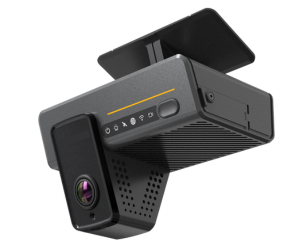
Argus Tracking VISION AI

VISION AI is Argus Tracking’s all-in-one, AI-powered commercial dashcam solution, designed specifically for fleet operations.

Instead of adding another device to manage, VISION AI combines:

  • GPS vehicle tracking

  • Fleet management software

  • An AI-powered dual-lens dashcam detecting a massive range of potentially compromised driving practices - from no seatbelt to using a phone while driving to other drivers being dangerous

All delivered within a single plan ($62/month as of March 2026).

This integration turns video footage into meaningful operational insight without adding system complexity.


VISION AI: Built for Fleet Safety and Control

Here’s how VISION AI supports safer and more efficient fleet operations.

1. Dual-Lens AI Dashcam

VISION AI captures a complete view of every journey using:

  • 140° road-facing camera

  • 170° driver-facing camera

This provides visibility of both road conditions and in-cabin activity, helping eliminate blind spots and giving you full driving context during investigations aiding in driver exhoneration and more.

2. AI-Powered Road Safety (ADAS)

The road-facing camera uses Advanced Driver-Assistance Systems (ADAS) to detect:

  • Forward collision risks

  • Pedestrians

  • Lane-related hazards (drifting, other driver errors, and more)

Drivers receive real-time alerts, helping them respond earlier and potentially preventing incidents before they escalate.

It’s about supporting drivers in the moment, and giving you the ability to coach after the fact.

3. AI-Powered Driver Monitoring (DSC)

The driver-facing camera monitors behaviours that influence safety and liability, including:

  • Fatigue and drowsiness

  • Phone use and distraction

  • Smoking

  • Seatbelt usage

When risk is detected, alerts are triggered and footage is recorded for coaching and review.

This gives you the opportunity to guide safer habits through constructive conversations rather than relying solely on manual supervision (or none at all!).

4. Automatic Driver Identification

VISION AI includes built-in facial recognition for Driver ID.

By uploading driver identification images into the Argus dashboard, the system automatically recognises who is driving without additional hardware or swipe cards.

For fleets with multiple drivers per vehicle, this ensures accurate trip and event attribution without adding administrative burden. Perfect for cost centre alloation through to driver exoneration.

5. Always Connected, Always Accessible

VISION AI stays connected via 4G, enabling:

  • Real-time video uploads

  • Remote playback

  • Live viewing

Footage can be accessed anytime, even when the vehicle is turned off.

When an insurance claim or compliance review arises, quick access to footage can make a significant difference, helping you prove your case with ease.


Why Choose Argus Tracking?

Technology on its own doesn’t modernise a fleet. A structured approach does.

Argus Tracking supports organisations through the Fleet Intelligence Risk Modelling (FIRM) framework — a nine-dimensional model that helps fleet managers identify and prioritise operational risks.

Rather than layering technology on top of existing challenges, FIRM encourages fleets to:

  • Identify their highest exposure areas

  • Address risks in a practical order

  • Align technology with measurable outcomes


VISION AI fits naturally into this approach by strengthening:

  • Driver behaviour management

  • Incident response capability

  • Compliance and evidential processes

  • Financial risk visibility

At Argus, our focus isn’t just on devices. It’s on helping fleets move toward greater operational maturity with the right systems in place.

Beyond our smart frameworks and technology, customers consistently tell us they choose Argus Tracking for three key reasons.

1. Cost-Effective

Argus Tracking delivers world-class fleet management solutions at an affordable cost, because we believe the best technology should be accessible to every business — not just large enterprises.

Our pricing model is built around flexibility and practicality. With customisable plans to suit fleets of any size, you can choose the level of functionality that aligns with your operational goals and budgets, ensuring you invest only in what your business requires.

2. Technology You Can Rely On

Our system delivers highly accurate, real-time GPS tracking powered by multiple satellites, ensuring reliable performance even in remote or off-road environments.

We continually invest in innovation, so your fleet benefits from up-to-date technology that evolves alongside industry standards and operational needs. We do the hard work so you don’t have to.

3. Dedicated Customer Support

Every Argus customer is supported by a dedicated account manager and our responsive New Zealand–based support team.

We stay with you every step of the way to ensure you get the most out of your system. You’ll also have access to our online knowledge base, providing clear, step-by-step guidance whenever you need it.

Choosing Argus Tracking means partnering with a team that understands fleet operations and is committed to helping you manage risk, improve safety, and operate with confidence.


How VISION AI Supports Insurance Claims and Dispute Resolution

Video-backed evidence brings clarity during:

  • Accidents

  • Third-party claims

  • Customer complaints

  • Compliance investigations

Time-stamped footage, supported by GPS data, reduces reliance on conflicting accounts and manual, or even eye-witness, reconstruction of events.

For fleet managers, operational leaders, CFOs, and small business owners, this means fewer unnecessary costs, less downtime, and smoother incident resolution.

Frequently Asked Questions About VISION AI

  • VISION AI is more than a dashcam. It combines an AI-powered camera, GPS vehicle tracking, and fleet management software in a single, integrated solution.

  • VISION AI provides AI-driven alerts for collision risks, pedestrian detection, and driver fatigue or distraction. These alerts support earlier reactions, helping reduce the likelihood of incidents.

  • No. VISION AI uses built-in facial recognition to identify drivers without extra devices or additional costs for driver ID hardware. This can be activated or not, depending on your requirements.

  • Yes. VISION AI supports real-time uploads, remote playback, and live viewing through 4G connectivity.

Why Now Is a Practical Time to Upgrade

Delaying improvements often means carrying existing risks forward.

As the end of the financial year approaches, many organisations naturally review operational spending and risk exposure. It’s a sensible time to assess whether your current dashcams, or standalone systems, are delivering the visibility and protection you expect.

For fleets already using Argus GPS tracking, upgrading to VISION AI can be a straightforward next step toward stronger risk control.

Key Takeaways

  • VISION AI combines AI dashcam, GPS tracking, and fleet management

  • Real-time alerts support proactive risk reduction

  • Not all commercial dashcams are integrated fleet systems

  • Standalone cameras can create operational friction

  • Automatic driver ID improves accountability

  • Remote video access strengthens insurance and compliance processes

  • Argus Tracking supports structured fleet maturity through FIRM

Take the Next Step with VISION AI

If your fleet is relying on standalone cameras or disconnected systems, it may be time to reassess.

VISION AI was designed to give fleet operators clearer visibility, stronger driver safety support, and practical operational insight, all within one connected platform.

Reach out to Argus Tracking today to learn how VISION AI can support your fleet!

Digital Road User Charges in NZ: Why EOFY Is the Right Time to Prepare for the 2027 RUC Transition

For many New Zealand businesses, the end of the financial year (EOFY) is more than a reporting milestone. It is the period when leaders step back and ask whether their operational spending is truly fit for the future.

For organisations that manage fleets, this reflection is becoming increasingly urgent. With the New Zealand Government signalling a transition away from petrol excise toward electronic road user charges (eRUCs) for light vehicles, businesses are facing both compliance change and a structural shift in how fleet costs are tracked, reported, and managed.

As EOFY approaches, digital road user charges in NZ are increasingly viewed as a strategic investment rather than a reactive compliance task.


EOFY: Why NZ Businesses Rethink Fleet Spending in February and March

February and March are when most NZ companies:

  • Finalise budgets

  • Assess operational inefficiencies

  • Decide where to invest and where to stop carrying legacy processes

Fleet-related costs often attract attention at this time because they are:

  • Significant

  • Ongoing

  • Operationally complex

Road user charges, in particular, tend to expose inefficiencies at the EOFY. Manual tracking, spreadsheet reconciliation, and last-minute adjustments often create pressure for fleet managers and finance teams responsible for closing the books accurately.

This is why EOFY is often the moment when businesses decide whether to continue managing around RUCs, or to modernise how they are handled altogether.


New Zealand’s Shift from Petrol Tax to Electronic Road User Charges

At its core, the Government’s position is based on a simple reality: the old transport funding system assumed that everyone bought petrol. That assumption no longer holds.

New Zealand’s vehicle fleet has changed dramatically over the past decade. According to Transport Minister Chris Bishop, the number of fuel-efficient petrol hybrid vehicles increased from around 12,000 in 2015 to approximately 350,000 by 2025, which is roughly a 2,800% increase. This growth sits alongside the rapid adoption of electric vehicles and other low-emission technologies.

As a result, petrol purchases are no longer a reliable proxy for how much people actually use the road network. Some drivers now travel long distances while buying little or no petrol, while others drive far less but continue to pay petrol excise every time they refuel. This creates a growing mismatch between road use and road funding.

Road user charges take a different approach. Rather than charging indirectly through fuel purchases, RUCs charge directly based on distance travelled, with rates that vary by vehicle type. From a policy perspective, this is seen as a fairer and more sustainable system — one where people contribute in proportion to how much they use the roads, regardless of what powers their vehicle or whether they can afford newer technology.

Put simply, the policy logic is:

If you use the roads more, you should pay more — regardless of fuel type.

That fairness principle underpins the Government’s move toward a single, distance-based electronic road user charge system for all vehicles, including light vehicles, later this decade.

In summary, the shift toward electronic RUCs is driven by:

  • Fairness - ensuring all vehicles contribute based on actual road use

  • Accuracy - replacing fuel-based proxies with distance-based charging

  • Sustainability - ensuring road funding remains viable as vehicle technology and fuel use changes

  • Efficiency - enabling more automated, auditable compliance

These NZ road user charges changes reflect global trends toward digital, usage-based transport systems.


Who Will Be Affected

The shift toward electronic road user charges is expected to apply broadly, including to both private and business vehicles, as New Zealand moves toward a single, distance-based system.

However, the impact will be felt most immediately by organisations that operate fleets, including:

  • Light vehicle fleets

  • Mixed fleets (diesel, petrol, EV and hybrid)

  • Businesses currently relying primarily on petrol excise

  • Fleet managers and finance teams responsible for compliance and reporting

While private vehicle owners will also be part of the long-term transition, businesses face earlier and more complex challenges due to:

  • Higher vehicle utilisation

  • Larger compliance obligations

  • Greater financial and reporting risk

In practice, this means most organisations operating vehicles for business purposes will be substantially affected, even if the broader policy change applies to all road users.


What Is the Expected Timeline?

While exact implementation details are still being refined, the mid-to-late 2020s, commonly referenced around 2027, is widely discussed as a milestone for broader light-vehicle RUC changes.

Importantly, this does not mean businesses should wait until 2027 to act. As expectations around digital record-keeping, accuracy, and audit readiness increase, manual approaches will become harder to justify well before formal mandates arrive.


Why Digitalising RUC Operations Early Matters

One of the biggest risks for fleets is waiting until change is forced.

When regulatory transitions occur at scale, businesses that delay often face:

  • Compressed timelines

  • Limited implementation support (especially from third parties)

  • Higher risk of manual errors under time pressure

  • Increased compliance risk

Digitalising RUC operations early allows organisations to:

  • Spread change over time

  • Train teams gradually

  • Improve data quality before scrutiny increases or full rollout is implemented

  • Avoid last-minute operational disruption

A business’s EOFY provides a natural decision point to start this transition deliberately rather than reactively.


Smart ERUCs: How Argus Supports the RUC Transition Today

Argus eRUC display screen

Argus Tracking’s Smart ERUCs are designed to help fleets meet current road user charge requirements while preparing for New Zealand’s transition toward digital, distance-based RUCs.

At the core of our Smart ERUCs is automated RUC management that is fully integrated with NZTA. RUC purchases are updated automatically and displayed on NZTA-approved, scannable digital RUC screens, giving drivers and inspectors clear, up-to-date visibility of charges information when required.

These digital RUC screens can be mounted on vehicle windshields and are compatible with EVs, plug-in hybrids (PHEVs), and diesel vehicles. Each unit uses an energy-efficient, solar-powered display and can be self-installed without complex wiring, making rollout simple across diverse fleets.

To reduce manual administration further, Smart ERUCs also provide flexible automatic repurchase settings, allowing fleets to trigger RUC top-ups a set number of kilometres before expiry. This helps maintain continuous compliance while minimising last-minute interventions and operational risk.

Rather than waiting for nationwide change, fleets can adopt electronic road user charges today, using proven technology that is ready to support both current compliance and the transition ahead.


Key Benefits of Smart ERUCs for Fleet Managers and CFOs

From both an operational and financial perspective, Smart ERUCs deliver measurable benefits.

  • Reduced administrative burden

Manual RUC processes consume significant staff time. Smart ERUCs automate much of this workload, freeing teams to focus on higher-value tasks.

  • Fewer manual errors

Automation reduces reliance on manual distance tracking, odometer readings, and spreadsheets, lowering the risk of:

  • Incorrect RUC purchases

  • Inaccurate reporting

  • Costly compliance errors

  • Reduced exposure to fines and audits

Accurate, consistent records reduce compliance risk and improve audit confidence particularly as new RUC rules in NZ increase expectations.

  • Better cost visibility

By improving visibility into distance travelled and RUC obligations, digital RUC systems support more accurate budgeting and forecasting, especially as fleets adapt to changing RUC rates over time.


Why Argus Recommends RUC Digitalisation This EOFY

EOFY is an ideal opportunity to allocate budget toward reducing predictable future compliance and operational risks.

Argus recommends starting RUC digitalisation this EOFY because you can:

  • Avoid competing with a nationwide rush later

  • Modernise at a pace that suits your business

  • Start the new financial year with cleaner systems

  • Take advantage of the technology that is already available and mature

Waiting until electronic RUCs become mandatory risks turning a strategic upgrade into an urgent compliance scramble, along with everyone else.


Go Beyond RUCs: Understand Your Fleet’s Risk Maturity

Digital RUCs are one part of a broader fleet risk picture.

Alongside Smart ERUCs, Argus encourages organisations to use Fleet Intelligence Risk Modelling (FIRM) to understand:

  • The maturity stage of their fleet

  • The most common risks faced by similar fleets

  • Which investments will deliver the greatest immediate impact

Not every fleet needs the most advanced or expensive technology. What matters most is understanding:

  • Where your highest risks sit today

  • What solutions are appropriate for your fleet profile

  • How to sequence investment sensibly

This risk-led approach ensures technology adoption is practical, proportionate, and effective.


Final Thoughts: EOFY Is Your Opportunity to Get Ahead of the RUC Transition

The transition toward electronic road user charges in New Zealand is no longer theoretical. With light-vehicle RUC changes expected later this decade, businesses that manage fleets have a clear choice:

  • Wait and react under pressure, or

  • Prepare early, on their own terms

EOFY provides the ideal window to begin that preparation. By adopting digital road user charges in NZ now and pairing them with a clear understanding of fleet risk, organisations can reduce compliance stress, improve efficiency, and enter the next financial year with confidence.

Smart ERUCs are not just a response to future regulation. They are a practical step toward a more resilient, modern fleet — starting this EOFY.

Contact Argus to learn more about Smart ERUCs and fleet risk management!

Frequently Asked Questions: Digital Road User Charges in New Zealand

  • Petrol excise duty is not expected to end immediately, but the New Zealand Government has clearly signalled a transition toward distance-based road user charges for all vehicles, including light vehicles. This transition is widely discussed as occurring later this decade, with around 2027 often referenced as a milestone for broader change.

  • The shift is driven by changes in the vehicle fleet, including the growth of electric vehicles, hybrids, and fuel-efficient cars. Petrol tax is no longer an accurate way to fund road use. Electronic road user charges provide a fairer, more accurate system by charging vehicles based on actual distance travelled.

  • Over time, most vehicles using New Zealand roads are expected to fall under a road user charge framework, including light vehicles that currently pay through petrol excise. This will particularly affect businesses operating fleet vehicles, especially those with mixed or transitioning fleets.

  • Electronic road user charges, often referred to as ERUCs, use digital technology to automatically track distance travelled, calculate RUC requirements, and maintain compliance records. ERUCs reduce manual administration and improve accuracy compared to traditional, manual RUC processes.
    Learn more about Argus Tracking’s Smart ERUCs from HERE.

  • No. Many businesses are choosing to adopt digital road user charges in NZ now to reduce administrative burden, improve accuracy, and prepare for future regulation. Early adoption allows organisations to transition at their own pace rather than under regulatory pressure.

  • Digital RUC systems simplify EOFY by providing:

    • More accurate distance records

    • Cleaner reconciliation

    • Reduced reliance on last-minute estimates

    • Improved audit readiness

    This is especially valuable as EOFY approaches and reporting pressure increases.

The Ultimate 2026 Fleet Reset Guide: Six Steps in Four Weeks

Every January brings a sense of renewal, and 2026 feels different for many New Zealand fleet managers. The challenges of the past year haven’t fully lifted - costs are still high, roads are still busy, and customer expectations around reliability continue to climb - but something has changed in your favour.

Argus now offers more advanced tools, deeper data insights, and a game-changing fleet risk framework that gives managers, more than ever, a clear path forward. With better visibility, stronger safety tools and a smarter way to assess risk, this year offers an opportunity many fleets have been waiting for.

That’s why January 2026 is the perfect time for a Fleet Reset — a chance to step away from daily pressures, to look honestly at how your fleet performed in 2025, and build a strategy that sets you up for a safer, leaner and more modern operation.

Whether you manage five vehicles or five hundred, the steps below will help you reset with confidence.


January 2026 Is the Perfect Time for a Fleet Reset

A new year naturally encourages reflection, but this one brings unique reasons to pause and re-evaluate:

  • Economic pressure remains high: every litre of fuel and every minute of downtime matters.

  • AI-powered telematics tools are now essential: choosing the right technology matters more than choosing the most expensive technology.

  • Compliance expectations are tightening: requiring improved digital traceability and automation.

  • Leadership teams want measurable value and clear ROI: no more assumptions or vague updates.

Starting the year with intention gives you clarity, direction and control — three things every fleet manager needs in 2026.

Below are our six essential steps every fleet should tick off, followed by a simple four-week reset plan to kickstart your year.


Step 1: Look Back at 2025 Using Real Data

Before you can improve anything, you need a clear picture of what really happened last year. This is where telematics becomes invaluable. The numbers often tell a very different story from memory.

When reviewing your 2025 performance, pay attention to:

  1. Utilisation

    Which vehicles worked hard, and which barely moved?

  2. Cost drivers

    Was the issue fuel, idling, inefficient routes or repeated breakdowns?
    Or were compliance fines quietly eating into your budget?

  3. Driver behaviour

    Did speeding, fatigue, harsh braking or risky locations occur more often than you realised?

  4. Maintenance trends

    Were your repairs predictable and well-timed, or chaotic and disruptive?
    Did any vehicles consistently cause more downtime than others?

This is the moment many fleet managers find they have to admit,

“I thought I knew what was happening… until I saw the data.”

A clear, data-led understanding of 2025 gives you a solid foundation for your 2026 reset.


Step 2: Set Clear, Measurable Goals for 2026

Once you know where you stand, you can decide where you’re going. Most Argus customers start the year wanting to improve:

  • driver behaviour

  • compliance readiness

  • operating costs

  • vehicle downtime

  • customer service

But goals only work when they’re specific.

“Drive safer” doesn’t create change.
“Reduce speeding events by 20%” does.

Use the FIRM Framework to Set Smarter Goals

Fleet Intelligence Risk Modelling (FIRM) is Argus’s nine-dimension maturity model that helps you understand:

  • your fleet’s current maturity stage

  • the common risks linked to your maturity level

  • the most effective areas to improve first

FIRM turns complex fleet challenges into a practical, step-by-step roadmap. Once you know where your fleet sits, setting meaningful goals for 2026 becomes far more achievable.


Step 3: Build a Leaner, Smarter Operating Model

A modern fleet doesn’t just track vehicles, it uses the insights behind the data to continuously improve. Your 2026 operating model should help you reduce waste, cut admin time, avoid surprises so you can use your assets more effectively.

Here’s what this looks like in practice when you’re with Argus:

Right-size your assets

Argus Tracking’s Utilisation Report gives you a clear breakdown of how each vehicle is used. It can help you identify:

  • vehicles that could be retired or redeployed

  • assets that are under pressure and may need support or replacement

  • seasonal patterns that call for more flexible asset planning

Optimise your routes

Argus Tracking’s Route Planning & Optimisation report helps you identify the most efficient way to reach your job site, maximise time on site and provide more accurate estimated arrival times (ETAs).

Even small route improvements can save time and fuel across the whole year.

Move to planned maintenance

Instead of waiting for breakdowns, you can use system alerts to stay on top of:

  • WoF, COF, Rego renewals

  • driver licence expiries

  • vehicle maintenance schedules

  • fuel card use

  • insurance requirements

  • leasing opportunities

Regular, planned servicing reduces downtime and extends vehicle life.

Bring fuel discipline back under control

Fuel is one of the biggest controllable fleet costs. Telematics helps you identify:

  • excessive idling

  • fuel misuse, theft or fraud

  • ongoing inefficient driving

  • driving behaviours that increase fuel burn and waste

This is where many of our customers find fast, measurable savings.


Step 4: Put Driver Behaviour at the Heart of Your Reset

Drivers influence almost every metric that matters, such as safety, fuel, customer experience and vehicle wear. Improving driver behaviour creates measurable successes everywhere else.

Focus on the behaviours that matter most:

  • speeding

  • fatigue

  • distracted driving

  • harsh braking

  • tailgating / following too closely

Argus offers powerful tools to support safer driving, including behaviour reporting and video evidence from our VISION AI Dashcam. The dashcam detects root-cause behaviours early, allowing you to intervene before an incident occurs.

This all-in-one solution which includes dashcam, GPS tracking and fleet management software, is becoming increasingly popular among fleets wanting to build a stronger, more consistent safety culture.

Managing fatigue with data

Driver fatigue is one of the leading causes of vehicle accidents. To support safer driving practices and protect both drivers and the wider community, it’s important for organisations to monitor fatigue in a structured, data-driven way.

The Argus Fatigue Trip Report highlights any trips where a driver might have exceeded your organisation’s designated drive-time limits without taking a rest. For each vehicle, the report shows:

  • vehicle registration

  • actual trip duration

  • the amount of time the drive-time limit was exceeded

  • trip start and end times

  • departure and arrival addresses

  • total distance travelled

This gives you clear visibility into high-risk trips, helps you keep your fatigue-management policies on track and your drivers safe.


Step 5: Strengthen Compliance Before Mid-Year Pressure Hits

Compliance issues have a habit of appearing at the worst possible time. January is the ideal month to get ahead of them.

Argus strongly recommends automating and digitising compliance wherever possible. It dramatically reduces admin time, prevents missed deadlines and gives you back hours each week to focus on higher-value work.

The Argus system sends automated alerts for WoF, COF and Regos renewals, but one of the biggest improvements you can make this year is automating your RUC purchasing and claiming.

Our Smart ERUCs handle the process digitally and display the most up-to-date RUC status on an in-vehicle screen, helping you stay compliant without the paper chase. In fact, once you set it, you can forget it!

With major RUC law changes arriving from 2027, moving to automated RUC solutions in 2026 is a smart way to stay ahead of the curve.


Step 6: Use 2026 to Improve Leadership Visibility

Today, fleet managers are expected to offer more than operational updates. Leadership teams want clarity, insights, trends and action — not just raw data.

Telematics becomes much more powerful when you translate it into simple business language. When you regularly report on cost savings, safety improvements and fleet performance, leaders start to see the fleet as a driver of business success rather than a cost centre.

For example, you might share:

  • reductions in fuel spend and idling

  • fewer unsafe driving events and speeding fines

  • improved utilisation across your fleet

  • lower unplanned downtime

These are the kinds of stories that resonate in the boardroom. To support this, we recommend reading our full guide on how to communicate fleet value to your leadership team.


A Simple 30-Day Fleet Reset Plan

If the idea of resetting your entire fleet feels overwhelming, break it into small steps.

  • Week 1: Review your 2025 data and complete your FIRM maturity check.

  • Week 2: Set your 2026 KPIs and prioritise your top improvement areas.

  • Week 3: Reset driver expectations and hold your first safety briefing of the year.

  • Week 4: Set up dashboards, alerts and workflows that support your goals all year long.

Four weeks is all it takes to create powerful momentum for the rest of 2026.

If you want expert guidance as you work through your 30-day reset, our team at Argus is here to help! Reach out for a free consultation tailored to your fleet.


FAQs: Your 2026 Fleet Reset Questions Answered

  • A fleet reset is a structured review of how your fleet performed and where improvements can be made or are needed. In 2026, higher costs and tighter compliance expectations make this more important than ever.

  • Use telematics to review utilisation, fuel use, routes, idling, maintenance records, driver behaviour and more. This gives you a clear, honest picture of 2025.

  • Most fleets aim to reduce costs, improve safety, strengthen compliance and lower downtime. Make your goals measurable and link them to your FIRM maturity.

  • FIRM is Argus Tracking’s nine-dimension framework that shows your fleet’s maturity and risk across key areas. It helps you prioritise the most effective improvements and build a practical roadmap.

  • Use driver scorecards, coaching, fatigue reports and AI dashcams. These tools help reduce risky behaviours such as speeding, harsh braking and fatigue.

  • Digital compliance prevents missed renewals, avoids fines, simplifies audits and prepares your fleet for the 2027 RUC law changes.

  • They highlight idling, poor routes, misuse, under-utilisation and risky driving — all areas where savings can be made.

  • Focus on fuel savings, safety improvements, utilisation gains and downtime reductions. These metrics clearly show how your fleet supports the wider business.

  • Start with your data. Run a FIRM review. Set a few targeted goals. Reset driver expectations. Turn on dashboards and alerts. A 30-day reset will build strong momentum for the rest of the year.


Ready to Reset Your Fleet for 2026?

If you’d like help reviewing your fleet, checking your FIRM maturity or building a practical plan for the year, the Argus Tracking team is here to support you. With nearly 20 years of experience and world-class tools behind us, we’ll help you build a safer, leaner and more modern fleet for 2026 and beyond.

If you’d like to talk through your unique fleet challenges, our team is always happy to help. Reach out anytime for a free, no-obligation consultation!

The State of Fleet Management in 2025: Key Takeaways from a Changing Year

This year has been a defining year for fleet managers across New Zealand. Instead of focusing on shiny new technology or expansion, 2025 was about staying strong through economic pressure, working smarter with telematics data, and keeping drivers safe and compliant.

If you manage vehicles, you probably felt the pinch of rising costs, tighter margins and the need to prove that fleet management delivers measurable business value.

Here’s a look back at the biggest fleet management trends that shaped 2025 and what they mean for your business heading into 2026.


1. Surviving Cost Pressure and Doing More with Less

Smarter ways to control fleet costs

If there was one phrase that defined 2025 for New Zealand fleets, it was cost pressure. Fuel, servicing, insurance and labour all increased, forcing fleet managers to look harder for savings.

Instead of cutting corners, many turned to fleet telematics data to make smarter, evidence-based decisions.
Tracking tools became powerful cost-control systems, helping identify:

  • Fuel cost inefficiencies

  • Route inefficiencies

  • Fuel card misuse or fuel theft

  • Underutilised vehicles that could be sold or reallocated

With the right insights, businesses could see exactly where money was being wasted and take action quickly.

For example, one Argus Tracking customer used the Fuel Watch feature to spot fuel card transactions that did not match vehicle activity. Because Argus integrates with all major fuel providers such as bp and Mobil, every purchase appears directly in the Argus dashboard. When fuel was bought in one region while the vehicle was elsewhere, the manager quickly identified and stopped misuse, saving hundreds of dollars each month.

Fleet managers proving their value

Beyond cutting costs, 2025 was also the year many fleet managers had to prove the value of fleet management to their leadership teams.
With budgets tightening and every department asked to do more with less, executives wanted clear evidence of ROI, cost savings, utilisation and compliance improvements.

Those who could connect telematics insights to real business outcomes stood out.
Instead of presenting raw data, they focused on results, insights and next steps, showing how their fleets were improving efficiency, safety and profitability while finding new opportunities to strengthen operations.

We explored this topic earlier in the year in our blog How to Show Fleet Value to Leadership, which turned out to be one of the most popular articles of 2025.

When you can say, “Since launching driver coaching based on Argus data, we have seen a 40 % drop in speeding events”, that is not just a report. It is a story leadership understands.

Key takeaway:

Telematics is no longer only about where your vehicles are. It is about how much value your fleet delivers to the business through measurable savings, risk reduction and performance improvement.


2. Safety, Compliance and Risk Management Step Into the Spotlight

In 2025, fleet managers had to stay sharp as road safety, compliance and insurer expectations became a bigger part of everyday operations.

RUC law changes on the horizon

Argus Tracking - Smart ERUCs

One of the biggest upcoming shifts is the Government’s road user charge (RUC) reform.
In August 2025, the New Zealand Government confirmed that by around 2027, all light vehicles, including petrol cars, will transition to a fully digital RUC system. This change will replace traditional petrol taxes with a distance-based model for funding road maintenance.

For fleet managers, the RUC law change is a major turning point in compliance and cost management. With a digital system such as Argus Tracking’s Smart eRUCs, fleet managers can prepare early for the shift away from paper licences and ensure every light vehicle, whether petrol, diesel or electric, is ready to operate under the new digital framework.

By automating RUC management, Smart eRUCs reduces admin workload, prevents costly manual errors, keeps compliance current and gives your team more time to focus on core operations.

Fleet risk management

A strong safety record now has a direct impact on insurance costs, business reputation and driver wellbeing. This means fleet risk management is now a core part of running a reliable and responsible operation.

This is exactly why Argus introduced the Fleet Intelligence Risk Modelling (FIRM) framework in 2025. FIRM gives organisations a modern way to assess their fleet through the lens of fleet management risk. It outlines nine dimensions of fleet maturity, highlights the most common risks at each stage and provides a practical roadmap to move from basic capability to future-ready operations.

Instead of reacting after incidents have occurred, FIRM helps fleet managers take a more proactive approach. Every fleet is unique, and so are the risks it faces. By using FIRM, you can clearly see where your fleet currently sits within the nine dimensions, which vulnerabilities are most common at that level and what actions and technologies will deliver the greatest improvement.

Argus encourages fleet managers to use FIRM as a starting point for risk reduction and operational growth. It helps you understand your current maturity, uncover potential weak points and follow structured next steps to strengthen safety, compliance and efficiency.

You can learn more about Fleet Intelligence Risk Modelling (FIRM) here.

Key takeaway:

Fleet performance today is about more than vehicle uptime or fuel efficiency. It is about managing risk, protecting drivers and demonstrating compliance with the help of smart, data-driven technologies and frameworks.


3. The 2G and 3G Network Shutdown: A Wake-Up Call for Upgrades

One of the biggest topics in 2025 has been the countdown to the 2G and 3G network shutdown in New Zealand. One NZ has confirmed its 3G network will close by the end of 2025, with other providers expected to follow soon after.
Once these networks go offline, any vehicle tracking devices still relying on them will stop sending GPS tracking data, creating serious risks for day-to-day operations such as vehicle visibility, safety alerts and compliance reporting.

Why upgrading matters now

Missing the upgrade window can cause major disruption to your business. When older devices can no longer send data, your vehicles cannot be tracked, and this affects dispatching, customer service, driver safety and overall operational control.

Upgrading to 4G or 5G-ready devices such as the Geotab GO9 through Argus Tracking gives you more accurate, real-time data pulled directly from the engine. You will also gain access to new and upcoming features, including driver behaviour alerts for harsh braking, rapid acceleration and sharp cornering. These insights give you greater control and improved accuracy when managing risk and fleet performance.

Argus Tracking - VISION AI Dashcam

In addition, the device upgrade was the ideal moment to modernise fleet operations with AI-powered dashcams for many of our customers.
The Argus Vision AI Plan is an all-inclusive solution that provides an AI-powered dashcam, GPS vehicle tracking and full access to the Argus fleet management platform. The dual road and driver-facing camera lenses detect fatigue, distractions and collisions in real time. With live video streaming, time-stamped incident footage and automatic safety alerts delivered through your Argus dashboard, you can respond faster, reduce false insurance claims and protect drivers more effectively.

How Argus is helping

At Argus Tracking, we have helped many businesses prepare for the 3G shutdown.
We understand that upgrading can feel like another cost in a tough economy, which is why we continue to offer a complimentary device swap for fleet owners transitioning to newer units.

If you have not checked your hardware yet, now is the perfect time.
Contact our team for a free consultation to see if your tracking devices are ready for 2026. If not, we will help you upgrade through our free device swap programme.
Call us now on 0800 872 548.

Key takeaway:

Staying connected means staying in control. Make sure your fleet hardware keeps pace with the network it relies on.


What 2025 Taught the Fleet Industry

Looking back, 2025 tested every fleet manager’s adaptability. From battling rising costs to managing new compliance rules and preparing for technology changes, it was a year that demanded focus and flexibility.

The key lesson is clear: data and the right technology make fleets stronger. Fleets that used telematics to guide decisions became more efficient, safer and better prepared for the future.

Smart managers turned cost pressure into an opportunity to prove value. They used telematics data to cut waste, demonstrate savings and improve driver performance. They adopted automation tools such as Smart eRUCs to stay compliant and reduce admin time.

By the end of 2025, many New Zealand fleets had transformed into data-driven operations capable of delivering measurable results across cost, safety and compliance.


Key Takeaways for 2026

As you plan ahead for 2026, now is the perfect time to reflect on your 2025 data and set new goals for improvement.

1. Continue to optimise costs

Economic pressure may continue for a little longer, so ongoing cost optimisation should stay a top priority. Your telematics data is the key to identifying where you can cut unnecessary spend and achieve peak productivity. Regularly review your Argus dashboards to monitor utilisation, driver safety and fuel efficiency. Even small improvements can make a big difference to your bottom line.

2. Identify your fleet’s maturity stage

Every fleet is at a different stage of operational maturity. Use Argus’ Fleet Intelligence Risk Modelling (FIRM) framework to understand where your fleet currently stands and what common risks exist at that level. FIRM helps you recognise strengths, pinpoint improvement areas and take action before small issues become costly problems.

3. Invest in the right technology

Once you know your maturity stage, use that insight to invest wisely. Argus’ FIRM framework highlights which technologies and solutions will deliver the most value at each stage. Whether that means automating compliance with Smart eRUCs, adopting AI Vision dashcams, or exploring other solutions, the right tools will help eliminate risk and elevate your fleet operations to the next level.

Key takeaway:

2026 will reward fleets that combine smart data, proactive risk management and the right technology.
By using Argus Tracking tools to guide each step, you can build a fleet that is cost-efficient, compliant and ready for growth.


FAQ: Fleet Management in 2025

  • Rising operating costs, new compliance requirements and increasing pressure to demonstrate business value were the biggest challenges for fleet managers in 2025.
    Many New Zealand fleets used Argus Tracking telematics to find cost savings, manage risk and maintain compliance efficiently.

  • Telematics gives full visibility into your fleet operations.
    With Argus, you can identify fuel inefficiencies, underused vehicles and optimise routes. These insights help you reduce operating costs and improve productivity.

  • Smart eRUCs is Argus Tracking’s digital road user charge solution.
    It automates the entire RUC process, removes paper licences and keeps your fleet compliant with upcoming reforms.
    By reducing manual handling, it saves time and prevents costly fines or errors.

  • FIRM is a framework developed by Argus Tracking to help businesses measure and manage fleet risk.
    It identifies your fleet’s maturity stage, pinpoints common risks and provides a clear roadmap to strengthen safety, compliance and efficiency.
    It is the simplest way to understand where your fleet stands today and how to progress with confidence.

  • Fleet managers should continue optimising costs, identify their maturity stage using FIRM and invest in technology that supports their next phase of growth.
    Those who combine telematics insights with proactive risk management will be best positioned to lead in 2026.


Final Thoughts

2025 challenged fleet managers to think smarter, act faster and do more with less. Those who embraced telematics insights, automation and proactive risk management have built a stronger foundation for the years ahead.

As you move into 2026, focus on continuous improvement. Use telematics data to control costs, apply FIRM to identify and manage risks and invest in technology that matches your fleet’s maturity stage.

At Argus Tracking, we are here to help you make that journey simple. Whether you want to automate compliance, reduce costs or modernise your fleet operations, our team can help you find the right tools and strategies to keep your business moving forward.

If you are ready to unlock more value from your data and take your fleet to the next level, contact our team today.
Let’s make 2026 the year your fleet performs smarter, safer and stronger than ever!