The government has proposed a major overhaul of how fringe benefit tax (FBT) applies to vehicles. If the Bill passes as drafted, the work-related vehicle exemption that many branded work utes rely on today would end on 1 April 2027, and every employer-provided vehicle would move into one of six new categories based on how much private use you allow.
This is a proposal for now. The Taxation (Annual Rates for 2026–27, FBT Simplification, Foreign Investment Funds, and Remedial Measures) Bill was introduced to Parliament on 10 September 2026 and is currently with the Finance and Expenditure Committee. The detail could change before it becomes law. The direction is clear enough, though, that fleet operators running utes and vans have good reason to start looking at how their vehicles are used before the new rules are due to start.
Here is what is being proposed, what it would mean for a typical light fleet, and the practical steps worth taking between now and April.
Where the Bill is up to
Introduced: 10 September 2026, by the Minister of Revenue.
Current stage: select committee. The Finance and Expenditure Committee is considering the Bill, and businesses can make submissions once the committee opens them.
Proposed start date: 1 April 2027 for the new vehicle categories and valuation rates.
What could still change: anything in the Bill, including the categories, the rates and the branding rules, until it passes its final reading.
You can read the Bill as introduced and Inland Revenue's official commentary, which explains the reasoning behind each change.
How work vehicles are taxed today
Under the current rules, FBT applies to any day an employer-provided vehicle is available for an employee's private use. Many trades and field-service businesses avoid most of that cost through the work-related vehicle exemption. To qualify, a vehicle must weigh 3,500 kg or less, be designed mainly to carry goods (or goods and passengers equally), carry permanent business signage, and be covered by a written notice telling staff that private use is limited to necessary home-to-work travel and incidental business travel.
The catch is that the exemption is lost for any day the vehicle is available for private use. That is why overnight and weekend use has always been the grey area for fleets, and why we wrote about getting overnight use right earlier this year.
What the Bill proposes
The Bill replaces day-by-day counting with categories. When you provide a vehicle to an employee, you would place it in one of six categories based on the private use you allow. FBT would then be worked out on a set share of the vehicle's taxable value, called the inclusion rate.
Category | Private use allowed | Branding required? | Inclusion rate |
1. Default | Unrestricted private use, including weekends, leave and commuting | No | 100% |
2. Mainly business, partial private use | Rostered days off, public holidays, leave days and commuting | Yes (some farming businesses excepted) | 35% |
3. Mainly business, on farmland | Private use when not working, for shareholder-employees of closely held farming companies | No | 35% |
4. Mainly business, minor private use | Commuting between home and a single workplace only | Yes | 20% |
5. Business use | Commuting only, where the work involves multiple work sites or a limited-duration project | Yes | 0% |
6. Pool vehicle | Business use only (apart from incidental private use), and the vehicle is not allocated to one employee | No | 0% |
Source: Inland Revenue bill commentary and BDO New Zealand. "Mainly" business use generally means more than half the vehicle's use is for business, with home-to-work travel excluded from the business count.
A few other proposed changes matter for fleets:
Three exemptions would go. The work-related vehicle exemption, the emergency call-out exemption and the business travel exemption would all be repealed.
Branding becomes a condition for categories 2, 4 and 5. Vehicles acquired before the Bill was introduced on 10 September 2026 would not need to meet the new branding requirement, and Inland Revenue could grant exemptions in some situations.
Day counting and logbooks would largely disappear. You would choose a category based on expected private use, and only revisit it if that use changes materially. A change would apply from the first day of the next quarter. If you choose no category, category 1 applies by default.
Lower rates for cleaner vehicles. The proposed valuation rates are slightly lower for hybrids and lower again for electric vehicles, which adds another factor to planning an EV transition and to the running-cost comparison in our petrol, hybrid or electric guide.
What it could mean for your utes and vans
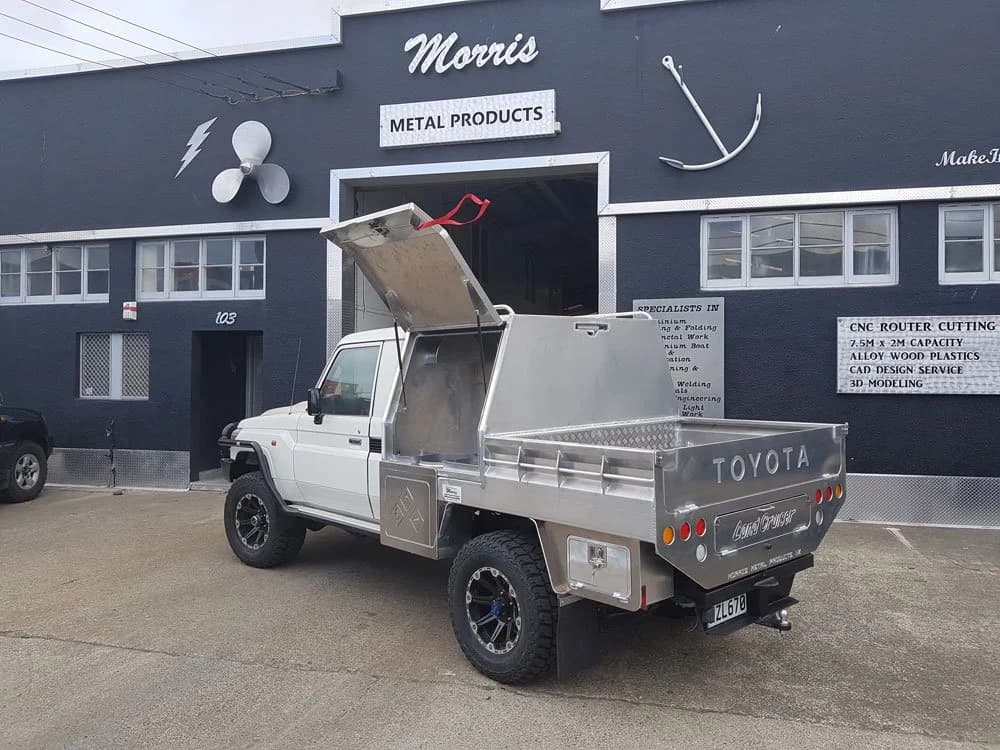
Under the proposal, a branded double-cab ute would stop being exempt simply because of its design and signage. Its FBT position would depend on which category its use fits, and that is a question about how your people use the vehicle day to day.
Take a 30-vehicle electrical contractor as an example. Under the proposed rules, its vehicles could end up spread across several categories:
Utes taken home each night by electricians who drive straight to a different customer site each day could fit category 5, at a 0% inclusion rate, provided private use stays limited to that commuting.
A ute driven by a supervisor who commutes to the same depot every day could sit in category 4, at 20%.
A vehicle a staff member is allowed to take away on weekends and holidays would sit in category 2, at 35%.
Vans kept at the yard and booked by whoever needs them could qualify as pool vehicles in category 6, at 0%.
The commentary sets a reasonableness standard for choosing a category. A vehicle that is in practice a perk would be unlikely to meet it, whatever the policy says on paper. Advisers such as BDO are recommending that employers keep records that support each vehicle's category, including vehicle policies, employment agreements, signage records and allocation records, and that they define clearly what private use is allowed on weekends, during leave and over holidays.
Five things to do before April 2027
List every vehicle, who drives it and where it ‘sleeps’. A register showing each vehicle, its allocated driver (or pool status), its home base and its acquisition date is the starting point for any category decision, and the acquisition date tells you whether the new branding rule applies.
Look at how your vehicles are used today. The summer shutdown is the longest stretch of potential private use most fleets will see before April. It is a useful baseline for which vehicles stay parked, which go home and which travel further than the commute.
Review your vehicle policy and employment agreements. The proposed categories turn on what private use you permit, so the wording of your policy will matter more than it does today. Check it says what you intend for weekends, leave and holidays.
Check branding on new vehicles. Vehicles acquired since 10 September 2026 would need branding to sit in categories 2, 4 or 5 under the Bill as drafted. Factor that into any vehicles you are ordering now.
Talk to your accountant, and keep an eye on the Bill. Your adviser can tell you how the proposal would apply to your vehicles. If the changes would affect your business significantly, the select committee process is your opportunity to make a submission.
Where fleet data helps
Every category turns on what private use you allow, and whether day-to-day use matches that policy. Telematics shows the second part without relying on logbooks.
Trip history. Argus Tracking records every trip with start and end locations, times and distance, so you can see how each vehicle has been used over any period, including weekends, public holidays and the summer break.
Overnight location and geofences. Argus logs where each vehicle is parked between its last trip of the day and its first trip the next morning, and geofences around your depot and staff home addresses record and alert you automatically when a vehicle stays somewhere other than the yard.
Pool vehicle bookings. Category 6 depends on a vehicle being shared and used for business. Argus Tracking’s car pool management system 'FleetHub' records who booked each vehicle and when, flags trips taken without a booking, and reports on overnight bookings. Our guides to pool vehicle booking systems and getting more out of fewer vehicles cover how that works.
The Bill does not set out what evidence Inland Revenue will expect for each category, so data of this kind supports your decisions rather than replacing your adviser's view. It does give you and your accountant an accurate picture of how your fleet is used, which is the information the new categories are built on.
Frequently asked questions
Are the new FBT rules law yet?
No. They are part of a Bill introduced on 10 September 2026 that is now at select committee. They would only take effect if Parliament passes the Bill, and the detail could change along the way.
When would the changes start?
The Bill proposes that the new categories and valuation rates apply from 1 April 2027.
Will branded utes still be exempt from FBT?
Under the Bill as introduced, the work-related vehicle exemption would be repealed. A branded ute would be taxed according to the category its private use fits, which for many work utes could be category 4 (20%) or category 5 (0%).
Do vehicles I already own need new signage?
The Bill proposes that vehicles acquired before 10 September 2026 would not need to meet the new branding requirement for categories 2, 4 and 5.
Will I still need logbooks?
The proposal replaces day counting with categories chosen on expected private use, so routine logbooks would largely fall away. You would still need to choose each category with reasonable care and revisit it if a vehicle's use changes materially.
Does GPS tracking data prove a vehicle's category?
The Bill does not specify the evidence Inland Revenue will accept. Trip and location records give you an accurate view of how each vehicle is used, which helps you and your adviser choose and support the right category. Talk to your accountant about the records your business should keep.
The bottom line
If the FBT Simplification Bill passes as drafted, the tax treatment of your work utes from April 2027 will depend on how they are used. The fleets in the best position will be the ones that already know where their vehicles go after hours. That starts with your own data, a clear vehicle policy and a conversation with your accountant, and there are five months to get it done.
If you want a clearer picture of how your fleet is used before April, get a quote or or talk to our NZ-based team.
This article is general information based on the Bill as introduced to Parliament on 10 September 2026 and Inland Revenue's commentary, as at the date of publishing. It is not tax advice. The proposals may change before they become law, so talk to your accountant or tax adviser about how they would apply to your business.
Sources